Half Six Fix:
Shostakovich 5
Sir Antonio Pappano
Wednesday 15 April 2026, 6.30pm



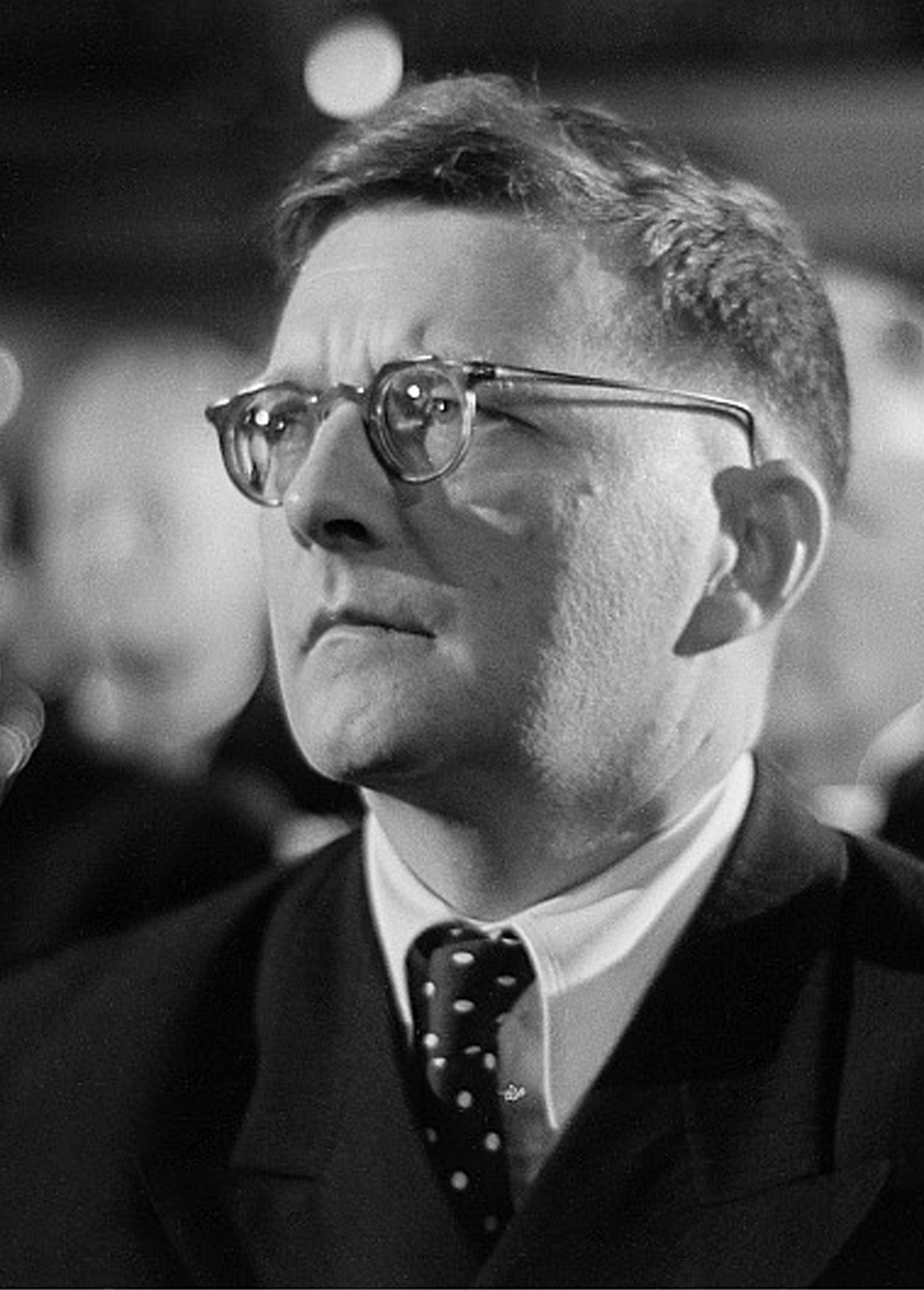
Dmitri Shostakovich
Born: St Petersburg, Russia, 1906
Died: Moscow, Russia, 1975
‘I feel as though we have started a new page in the history of symphonic music'. Nikolay Malko wrote these words in his diary after conducting the premiere of Dmitri Shostakovich’s First Symphony in St Petersburg in 1926. Shostakovich would go on to write 14 further symphonies over 45 years, music bound up in the shifting political landscape of 20th-century Russia – from the Revolutions of 1917 and the rule of Lenin, through the human and artistic atrocities imposed by Stalin, the siege of Leningrad and the cultural thaw from the mid-1950s under Khrushchev.
For 17 years after a humiliating editorial in the Party newspaper Pravda in 1936, Shostakovich tiptoed precariously around the Communist Party’s views on what was acceptable in music.
At one point, he kept a suitcase packed in case the secret police came knocking to send him to Siberia – or worse. As a result of the political pressures, his own true beliefs remain buried in layers of meaning and double-meaning. His final works – the last two symphonies, the last four string quartets and the Viola Sonata – are characterised by their sparse textures and searching intensity.
Shostakovich wrote 15 string quartets, six concertos (two each for piano, violin and cello) and the searing opera Lady Macbeth of the Mtsensk District, as well as scores for operettas, around 30 films and a jazz suite. He was also an avid football fan, claiming that football stadiums were ‘the only place where everyone can say out loud exactly what they think and see’.
Symphony No 5 in D minor Op 47
Dmitri Shostakovich
Sir Antonio Pappano conductor and presenter
London Symphony Orchestra
✒️1937 | ⏰ 45 minutes
1 Moderato
2 Allegretto
3 Largo
4 Allegro non troppo
What is the story?
Shostakovich wrote his Fifth Symphony at a time in Stalin’s Russia when artists were tightly controlled by the government. They were held to a policy of ‘socialist realism’, which broadly meant that art was required to be easily communicated – nothing too jarring or complex – rooted perhaps in the country’s folk heritage and intended to serve the people by boosting public morale. This artists had to do, or suffer the consequences. Shostakovich in particular had reason to look over his shoulder, since he had been lambasted in the press for his lewd, dissonant opera, Lady Macbeth of the Mtsensk District. Out of caution, he withdrew his challenging Fourth Symphony before its first performance. The Fifth would have to be more conformist and was presented as an acceptance of the State criticism – in effect an ‘atonement’ symphony.
What makes it so striking?
Some of the audience at the premiere, in Leningrad (now St Petersburg) on 21 November 1937, heard defiance. The symphony received an ecstatic, half-hour-long ovation. Was this the redemption it appeared to be, or was it actually a memorial to the millions who disappeared in Stalin’s Terrors?
The conductor Kurt Sanderling, hearing the first Moscow performance in 1938, remembered that ‘after the first movement, we looked round rather nervously, wondering whether we might be arrested after the concert’. The first three movements of the symphony are relatively bleak. Perhaps the authorities were swayed by the triumphant finale – though, according to the purported memoirs of the composer collated by Solomon Volkov, Shostakovich had confirmed: ‘It’s as if someone were beating you with a stick and saying, ‘Your business is rejoicing, your business is rejoicing’ and you rise, shakily, and go marching off muttering ‘Our business is rejoicing, our business is rejoicing’.
What’s the music like?
Did the audience at the Fifth Symphony’s premiere hear their own condition in the tense, unsettling first movement? The jagged, aggressive introduction soon slips away to reveal a weary, questioning theme in the first violins. The second theme, the violins now soaring higher over a long–short–short rhythmic accompaniment, is equally searching, if more serene. Ahead of the return of this material, the music becomes rhythmically driven, building to a sneering march and a further, powerful climax. The return of the earlier soaring theme (flute and horn now duetting) seems to bring hope, but the end leads us into an ethereal void.
The short second movement is the symphony’s scherzo. By convention, this is a quick, light-hearted piece, but this one opens with growling cellos and basses, joined by macabre pecking high winds. The central trio section spotlights a balletic solo violin and flute.
The Largo is the expressive core of the symphony and yet it took Shostakovich only three days to write. The strings strike a tragic tone, but there are moments of biting anguish too. At the symphony’s premiere, this movement prompted some in the audience to weep.
And then the finale, with its extrovert outer sections framing a darker, probing central section. After the fast music returns, the affirmation at the end is hammered home. Hard-won triumph or blatant caricature? Perhaps Shostakovich, partly with his own survival in mind, allowed for both interpretations.
Keep Listening
Delve deeper into the music featured in our Half Six Fix series, and find related music recommendations, with our Half Six Fix playlist.

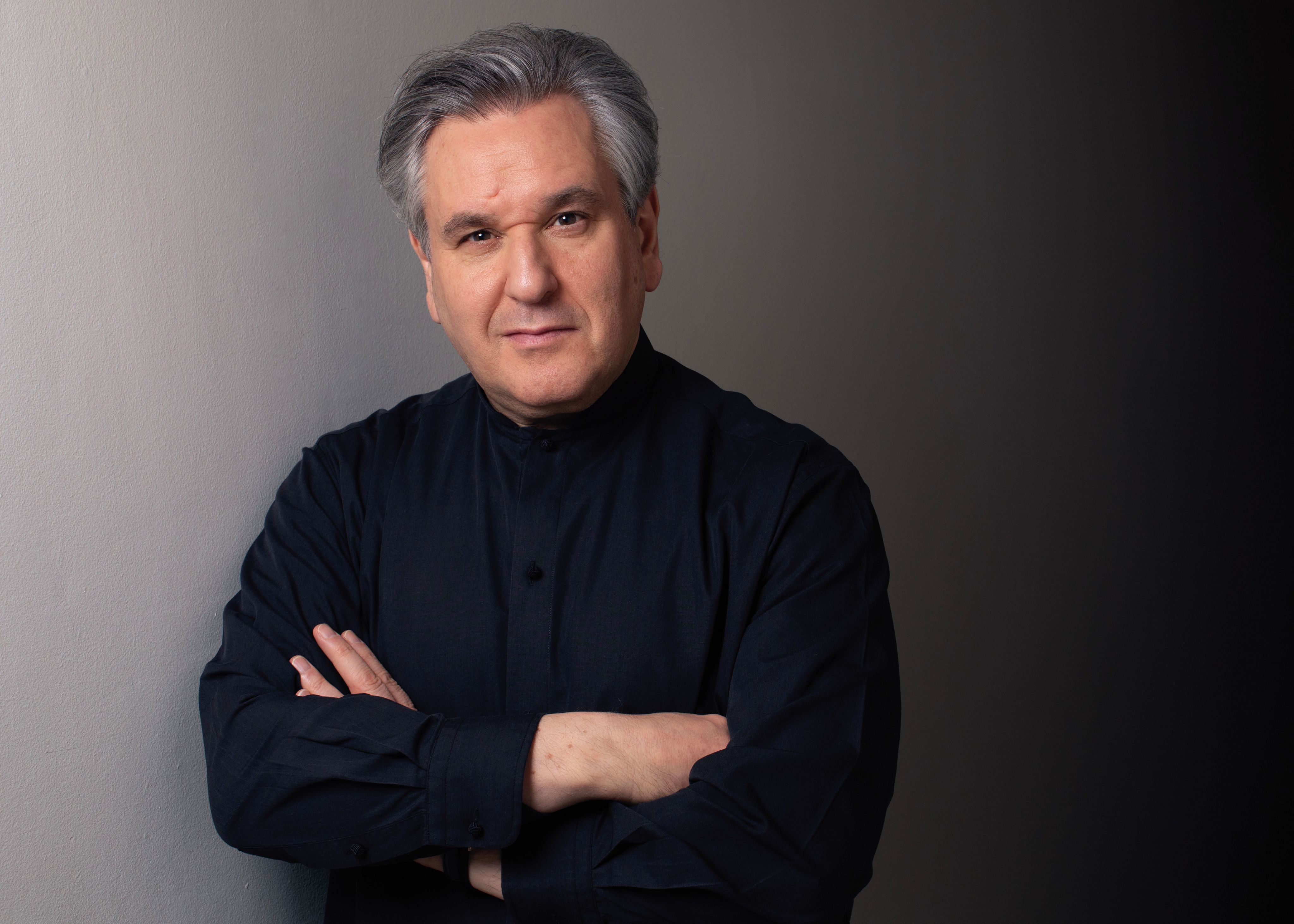
© Frances Marshall
© Frances Marshall
Sir Antonio Pappano
conductor and presenter
After 22 years as Music Director of the Royal Opera, Covent Garden, Sir Antonio Pappano succeeded Sir Simon Rattle here at the LSO – joining his ‘home’ international orchestra. He was born just 20 miles away from the Barbican, in Epping, and moved to the US aged 13, but now lives in London. He has held lead positions with the Théâtre de la Monnaie in Brussels (1992–2002) and the Orchestra dell’Accademia Nazionale di Santa Cecilia in Rome (2005–23).
Opera is in his blood, and he brings his love of dramatic narrative and storytelling to his orchestral performances, too. On the podium, he communicates with clarity and conviction, drawing playing of great immediacy from his musicians. His conducting style is unfiltered, impassioned and straight from the heart.
A natural communicator about music, he has presented programmes for BBC TV. Last year, he was appointed Commander of the Royal Victorian Order, having conducted at the Coronation of King Charles and Queen Camilla.
The London Symphony Orchestra
The London Symphony Orchestra believes that extraordinary music should be available to everyone, everywhere – from orchestral fans in the concert hall to first-time listeners all over the world.
The LSO was established in 1904 as one of the first orchestras shaped by its musicians. Since then, generations of remarkable talents have built the LSO's reputation for quality, daring, ambition and a commitment to sharing the joy of music with everyone. Today, the LSO is ranked among the world’s top orchestras, reaching tens of thousands of people in London and on stages around the world, and millions more through streaming, downloads, radio, film and television.
As Resident Orchestra at the Barbican since the Centre opened in 1982, the LSO performs some 70 concerts there every year with its family of artists: Chief Conductor Sir Antonio Pappano, Conductor Emeritus Sir Simon Rattle, Principal Guest Conductor Gianandrea Noseda, Conductor Laureate Michael Tilson Thomas, and Associate Artists Barbara Hannigan and André J Thomas. The LSO has major artistic residencies in Paris, Tokyo and at the Aixen-Provence Festival, and tours regularly in Asia and the US.
Through LSO Discovery, the LSO’s learning and community programme, 60,000 people each year experience the transformative power of music, with many more taking part in LSO Discovery’s work on tour and online. The Orchestra’s musicians are at the heart of this unique programme, leading workshops, mentoring bright young talent, working with emerging composers, visiting children’s hospitals, performing at free concerts for the local community, and using music to support neurodiverse adults. Concerts for schools and families introduce children to music and the instruments of the Orchestra, with an ever-growing range of digital resources and training programmes supporting teachers in the classroom.
The home of much of this work is LSO St Luke’s, the LSO's venue on Old Street. In the autumn of 2025, following a programme of works and upgrades, the LSO opened up the venue’s unique facilities to more people than ever before, with new state of-the-art recording facilities and community spaces.
The LSO’s record label LSO Live is a leader among orchestra owned labels, bringing to life the excitement of a live performance. The catalogue of over 200 acclaimed recordings reflects the artistic priorities of the Orchestra – from popular new releases, such as Janáček’s Katya Kabanova with Sir Simon Rattle, to favourites like Vaughan Williams’ symphonies with Sir Antonio Pappano and Verdi’s Requiem with Gianandrea Noseda.
The LSO has been prolific in the studio since the infancy of orchestral recording, making more recordings than any other orchestra – over 2,500 projects to date – across film, video games and bespoke audio collaborations. Recent highlights include soundtrack recordings for the video game Genshin Impact, a Mercury Music Prize-nominated collaboration with Floating Points and Pharoah Sanders, and appearing on screen and on the Grammy-winning soundtrack for the film Maestro, which was also nominated for multiple BAFTA and Oscar awards.
Through inspiring music, learning programmes and digital innovations, the LSO’s reach extends far beyond the concert hall. And thanks to the generous support of The City of London Corporation, Arts Council England, corporate supporters, trusts and foundations, and individual donors, the LSO is able to continue sharing extraordinary music with as many people as possible, across London and the world.
On Stage
Leader
Roman Simovic
First Violins
Savva Zverev
Clare Duckworth
Ginette Decuyper
Maxine Kwok
William Melvin
Stefano Mengoli
Claire Parfitt
Elizabeth Pigram
Laurent Quénelle
Harriet Rayfield
Sylvain Vasseur
Lulu Fuller
Dániel Mészöly
Hilary Jane Parker
Djumash Poulsen
Second Violins
Julián Gil Rodríguez
Sarah Quinn
Miya Väisänen
David Ballesteros
Alix Lagasse
Belinda McFarlane
Iwona Muszynska
Csilla Pogány
Mitzi Gardner
Juan Gonzalez Hernandez
Polina Makhina
José Nuno Matias
Lyrit Milgram
Chelsea Sharpe
Violas
Natalie Loughran
Gillianne Haddow
Anna Bastow
Germán Clavijo
Thomas Beer
Steve Doman
Julia O'Riordan
Robert Turner
Mizuho Ueyama
Sally Belcher
Lukas Bowen
Xinyuan He*
Anna Dorothea Vogel
Cellos
Timothy Walden
Alastair Blayden
Salvador Bolón
Daniel Gardner
Joanna Twaddle
Joachim Birman
Silvestrs Kalnins
Victoria Simonsen
Simon Thompson
Deborah Tolksdorf
Double Basses
Rodrigo Moro Martín
Jani Pensola
Lars Radloff
Axel Bouchaux
Noah Daniel*
Johane Gonzalez
Simon Oliver
William Puhr
Adam Wynter
* LSO String Experience Scheme Member
Kindly supported by the Barbara Whatmore Charitable Trust, the Idlewild Trust and The Thriplow Charitable Trust.
Concert generously supported by The Huo Family Foundation
Filmed for LSO Live
Flutes
Gareth Davies
Amy Yule
Imogen Royce
Piccolo
Patricia Moynihan
Oboe
Juliana Koch
Rosie Jenkins
Clarinets
Chris Richards
Chi-Yu Mo
Bass Clarinet
Ferran Garcerà Perelló
Bassoons
Daniel Jemison
Joost Bosdijk
Contrabassoon
Martin Field
Horns
Timothy Jones
Ben Hulme
Angela Barnes
Daniel Curzon
Jonathan Maloney
Trumpets
James Fountain
Sérgio Pacheco
Adam Wright
Katie Smith
Trombones
Simon Johnson
Jonathan Hollick
Bass Trombone
Paul Milner
Tuba
Ben Thomson
Timpani
Nigel Thomas
Percussion
Neil Percy
David Jackson
Sam Walton
Patrick King
Harps
Bryn Lewis
Anneke Hodnett
Piano
Elizabeth Burley
Programme Notes Edward Bhesania.
Editorial Photography Marco Borggreve
Edward Bhesania is a music journalist and editor who writes for The Stage, The Strad and the Guildhall School of Music & Drama.
LSO Visual Identity & Concept Design Bridge & Partners Details correct at time of going to print


 Built with Shorthand