



BMW Classics
Saturday 13 June 2026
Trafalgar Square & streamed live
Concert starts 4pm BST
BMW Classics is an annual open-air concert by the London Symphony Orchestra, live in London's iconic Trafalgar Square. You can join us in the Square or watch the live stream on YouTube and Facebook, but wherever you are, the concert is free for everyone to enjoy!
YOUR CONCERT GUIDE
Read all about the music and performers in today's concert in this digital guide. Navigate using the menu or menu icon (≡) at the top of the screen. Click any highlighted text to find out more.
OTHER INFORMATION
TELL US WHAT YOU THINK
We'd love to hear your thoughts on this event via a short survey.
With thanks to Nuts Coffee on the Go, Polly’s Parlour Ice Creams, British Cushions and all staff of the London Symphony Orchestra.
Event production: Kyle Buchanan, Caitlin Lobo, Tim Oldershaw, Sally Atkins, Jon Howes, Richard Nowell (RNSS), Number 8 Events.
Welcome
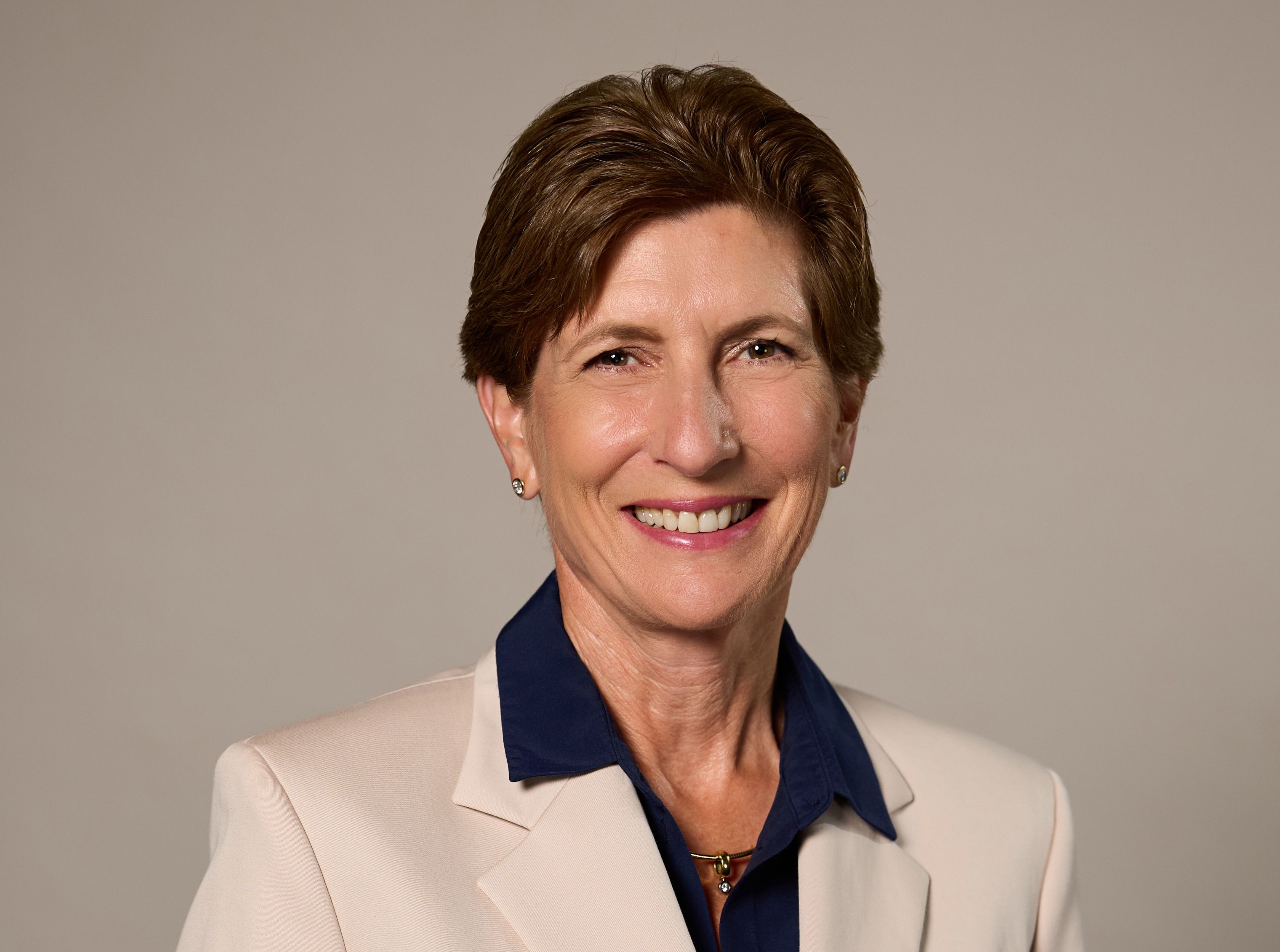
Music belongs at the heart of public life: accessible, shared and experienced together. BMW Classics stands for exactly this idea, bringing world‑class music to one of the most iconic urban settings.
For the 14th edition of BMW Classics, Trafalgar Square once again becomes an open‑air concert hall, defined by the artistry of the London Symphony Orchestra.
As one of the world’s leading orchestras, the LSO represents musical excellence at the highest level. Bringing this calibre of performance into the heart of the city reflects BMW’s commitment to the places and communities it engages with. With MINI and Rolls‑Royce proudly based in the United Kingdom, our connection to this country is deep and longstanding.
But BMW Classics is also shaped by you – the Londoners and guests who return year after year. It is the unique atmosphere of an open‑air concert in the centre of this vibrant city: music meeting the energy of the crowd, the openness of the space and the shared experience of a summer afternoon. I warmly invite you to embrace this moment and delight in the joy of music together.
Ilka Horstmeier Member of the Board of Management of BMW AG, People and Real Estate
Ilka Horstmeier Member of the Board of Management of BMW AG, People and Real Estate
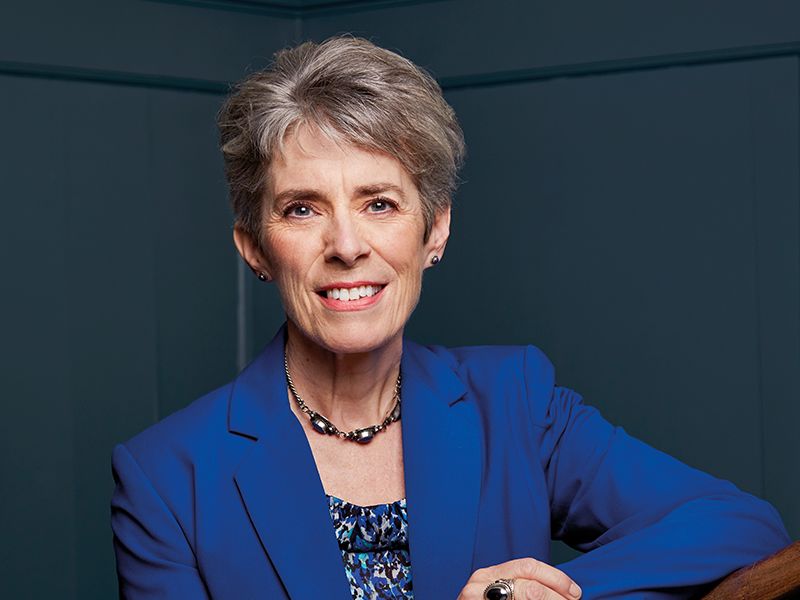
A warm welcome to this year’s BMW Classics concert with the London Symphony Orchestra, both to the audience here in Trafalgar Square and to those joining us around the world online. We are delighted to return once again for this free summer concert in the heart of London, bringing live orchestral music to one of the city’s most iconic public spaces.
We are grateful to our Principal Partner, BMW, whose continued support makes this event possible. Since the first BMW Classics concert in 2012, this partnership has enabled the LSO to perform to well over 100,000 people in Trafalgar Square, alongside millions more watching online.
Today’s concert is the second BMW Classics to be conducted by Sir Antonio Pappano, the LSO’s Chief Conductor, and the programme draws strongly on a British theme. Movements from Holst’s The Planets open the concert – Mars, Mercury, Jupiter, Venus and Uranus – followed by the world premiere of Louise Drewett’s Four Dances, specially commissioned for BMW Classics. This new work by Louise Drewett brings together LSO musicians, Guildhall School of Music and Drama students, and young musicians from LSO Discovery programmes. The programme concludes with movements from Elgar’s ‘Enigma’ Variations, a work woven deeply into the Orchestra’s history.
We would also like to thank Sir Sadiq Khan, the Mayor of London, for once again enabling us to perform in Trafalgar Square, and our streaming partner YouTube for helping us share today’s concert with audiences worldwide.
Whether you are in Trafalgar Square or watching online, we hope you enjoy the performance.
Dame Kathryn McDowell DBE DL Managing Director, London Symphony Orchestra
Dame Kathryn McDowell DBE DL Managing Director, London Symphony Orchestra
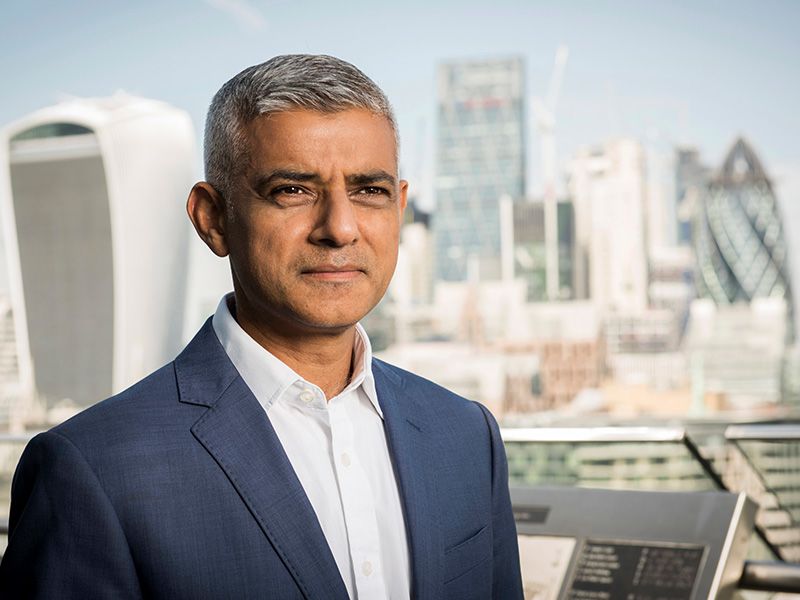
Welcome to London – the greatest city in the world!
London’s music scene is world-famous for its talent, diversity and, of course, our incredible venues. It’s why millions of visitors flock to our capital each year, and it’s why so many of us are proud to call it home. Whether you’re heading to the Royal Albert Hall, Barbican Centre, Wigmore Hall or one of the 200 grassroots venues across our city, you’re guaranteed to see something special.
I’m delighted to welcome the London Symphony Orchestra and its Chief Conductor, Sir Antonio Pappano, back to one of London’s most iconic locations: Trafalgar Square. In this year’s concert, young Londoners will be taking centre stage for the premiere of Louise Drewett’s Four Dances – a celebration of the River Thames in all its meandering majesty. Hearing our capital’s next generation of musical talent perform alongside one of the greatest orchestras in the world will be a real treat.
The BMW Classics concerts are a unique opportunity for Londoners and visitors to enjoy world-class classical music for free, right in the heart of our capital. They’re a highlight of our cultural calendar and a reminder of the incredible culture on offer in this city.
I hope you can join us in person or online for this very special concert.
Sir Sadiq Khan Mayor of London
Sir Sadiq Khan Mayor of London

Ilka Horstmeier
Ilka Horstmeier

Dame Kathryn McDowell © John Davis
Dame Kathryn McDowell © John Davis

Sir Sadiq Khan © Greater London Authority
Sir Sadiq Khan © Greater London Authority
Today's Programme & Performers
Gustav Holst
Movements from ‘The Planets’:
Mars, Mercury, Jupiter, Venus, Uranus
Louise Drewett
Four Dances (world premiere) *
Edward Elgar
Movements from ‘Enigma Variations’:
Theme, II HDS-P, III RBT, IV WMB, VII Troyte,
IX Nimrod, XI GRS, XIV EDU – Finale
Sir Antonio Pappano conductor
LSO Discovery Young Musicians *
Guildhall School Musicians *
London Symphony Orchestra
Programme notes & composer profiles by Sarah Breeden
Gustav Holst
Movements from ‘The Planets’
✒️ 1914–16 | ⏰ 35 minutes
Gustav Holst’s The Planets has fascinated audiences – and inspired composers (most notably John Williams’ score for Star Wars) – since it was written. Made up of seven contrasting sections, Holst takes us on an imaginative journey through our solar system, inspired by astrology and Roman mythology.
During a much-needed holiday in Spain in 1913, Holst was chatting with his friend, Clifford Bax (brother of composer Arnold) who brought up the subject of astrology. His fellow travellers were not particularly interested, but Holst was enthused. ‘As a rule, I only study things that suggest music to me,’ he was later to announce. ‘Recently the character of each planet suggested lots to me.’ Enthusiasm had a lot of heavy lifting to do – it would take him two years to complete the seven movements – but it would go on to become his most celebrated work. The LSO were the first orchestra to perform the work, in 1920, under Chief Conductor Albert Coates. They also played on the first two recordings (both conducted by Holst himself), the second of these making use of the new electrical recording process which revolutionised sound quality for orchestral works.
The seven movements are named after Roman gods, and each explores a distinct character. The Suite doesn’t include Pluto, which had not been discovered at the time. It also doesn't include Earth, which makes sense astrologically – as meaning comes from the positions of the planets as seen from our own. Today we will hear five movements:
Mars, the Bringer of War
Written under the shadow of World War I, Holst demanded that Mars represented ‘violence, fierceness, but above all the stupidity … of men and animals who take pleasure in fighting.’
Mercury, the Winged Messenger
Bright bells signal the arrival of skittish Mercury. Complicated rhythms keep the momentum going in this short but lively movement.
Jupiter, the Bringer of Jollity
King of the gods, benevolent and kind. The stirring central tune was later adopted for the hymn tune Thaxted (I Vow to Thee My Country), also used as the Rugby Union World Cup theme.
Venus, the Bringer of Peace
Venus symbolises harmony and reconciliation. Representing the stars are the heavenly harp, glockenspiel and the shimmering celeste.
Uranus, the Magician
The four mighty notes on brass that introduce Uranus spell out the musical equivalent of Holst’s name – he is the magician here. The four-note theme is heard throughout the movement against a contrasting, increasingly manic march.
Gustav Holst
1874 to 1934 (United Kingdom)
Born into a long line of professional musicians, Holst was steeped in music from an early age. He learned several instruments as a child, including piano. He had hoped to become a concert pianist, but this dream was shattered by neuritis in his right arm, which he described as feeling like ‘jelly overcharged with electricity’. Instead, he turned to the trombone, which he initially started learning to help his asthma (he suffered from poor health throughout his life). To earn some much-needed pennies, he pursued a performance career, composing in his spare time.
This practical experience proved invaluable but, frustrated by time limitations, Holst became a teacher, and worked for many years at St Paul’s Girls’ School in London. The school was delighted to have such a distinguished (if not, at the time, well-known) composer in their midst, even providing him with a soundproof room, and it was there that he wrote his most famous work ...
The Planets pushed Holst into the public eye at the age of 44, although fame was never his ambition, and he found the attention quite discomforting. He would protest that it was not his best work, and he left a catalogue of over 200 works that reveal an artist with more variety than he is perhaps credited. A polymath, Holst drew inspiration from English folk music (Suites for wind band and St Paul’s Suite), poetry (In the Bleak Midwinter), astrology, and ancient Hindu texts (Choral Hymns from the Rig Veda), even learning Sanskrit to further his understanding of the source material.
Holst took to heart his own advice: ‘never compose anything unless the not composing of it becomes a positive nuisance to you’ and continued to write all his life. He died after an operation for a stomach ulcer, aged 59.
SHARE YOUR SNAPS
We love to see how you're enjoying the concert. Tag us in your photos and use the hashtag #LSOBMWClassics.
Instagram @londonsymphonyorchestra
Facebook @londonsymphonyorchestra
TikTok @londonsymphonyorchestra
Threads @londonsymphonyorchestra
LinkedIn london-symphony-orchestra
Louise Drewett
Four Dances
(world premiere)
✒️2026 | ⏰9 minutes
LSO Discovery Young Musicians
Guildhall School Musicians
Composer Louise Drewett introduces her latest work ...
This piece – as its title suggests – is made up of four distinct dances. These dances celebrate the coming together of almost one hundred musicians to premiere the work in Trafalgar Square. The dances also celebrate London itself, and in particular, depict four striking public spaces along the Thames. The places are not far apart, yet, as so often in London, they evoke vastly different moods, from busy urban environments to tranquil, reflective landscapes. The dances flow seamlessly into one another, as if one was journeying from one place to the next.
The first dance conveys the busyness and excitement of walking along the Thames path by London Bridge. The river here is relatively narrow and is depicted through light, sparkling, folk-like melodies, while heavier brass chords imagine the large 1980s office buildings that border it. By the second dance we reach a much calmer, quieter landscape: Columbia Wharf in Rotherhithe. A long flowing string melody and accompanying bass line rise and fall like the motion of the river, which is the central feature of this space. The third dance – once again fast-paced – leads us to South Dock by Canary Wharf, a highly developed environment dominated by grand geometric structures. The final dance takes us further east again to Maritime Greenwich. Here, the river is noticeably wider, and the music reflects a more serene and expansive landscape. As we reach the Thames estuary, melodic lines in the strings, brass, and winds accumulate and expand in a final flourish.
Louise Drewett
Louise Drewett © Chelsey Browne
Louise Drewett © Chelsey Browne
Louise Drewett (b 1989) is a British composer based in London. ‘Clearly a talent with a very distinct sensibility’ (The Telegraph), Drewett writes concert music that draws on her formative experience working with community choirs.
Her music has been performed at venues including the Barbican, Royal Festival Hall, Wigmore Hall and Cafe OTO. She has received commissions from organisations including the London Sinfonietta and the International Guitar Foundation, and written for soloists including Lotte Betts-Dean, Andrew Watts, Joseph Havlat, Cristian Sandrin, Amy Jolly and Lucy Humphris. Her community opera, Daylighting, commissioned by the Royal Academy of Music for their 200th Anniversary, was nominated for an Ivor Novello Award at the Ivors Composer Awards 2022. Her educational music is published by ABRSM.
Drewett holds a PhD in Composition from the Royal Academy of Music, where she studied on a scholarship with Philip Cashian, Hans Abrahamsen and Oliver Knussen. At the Academy, she was Manson Fellow in 2021–22, and was awarded the 2018 and 2019 Charles Lucas Composition Prizes. Her study was supported by a Countess of Munster Musical Trust Award, a Vaughan Williams Bursary from the RVW Trust and the Charles Lucas Memorial Fund.
Drewett is a composition professor and lecturer at the Royal Academy of Music, where she was recently awarded an Associateship in recognition of her services to music. She works regularly with the New London Chamber Choir and Folkestone New Music, curating occasional concerts for each organisation.
LISTEN TO OUR RECORD LABEL
The LSO has made over 150 recordings through our record label LSO Live, and featured on many more, including some classic film scores like Star Wars. You can find us wherever you stream.
Edward Elgar
Movements from ‘Enigma’ Variations
✒️1898–99 | ⏰15 minutes
The 'Enigma' Variations are a celebration of friendship – a rare subject in classical music. The melody originated as a noodle Elgar was tinkling around with on the piano. It could have been so easily missed, had his wife’s ears not pricked up at this enchanting tune. On her encouragement, he developed it into 13 ‘musical sketches of my friends’ that would propel him, at last, into the public limelight.
Elgar loved a good puzzle. The piece wasn't originally entitled ‘Enigma’, but he added it to the score to create intrigue, claiming ‘the Enigma I will not explain – ‘its dark saying’ must be left unguessed’. He also said that, over all the variations, ‘another larger theme ‘goes’ but is never played.’ The mystery has never fully been solved, although many have tried (with some suggested answers such as a reference to Auld Lang Syne denied by Elgar himself). The piece was performed as part of the first-ever LSO concert, at the Queen's Hall in June 1904.
Each of the Variations are also given encrypted titles, although they weren’t too hard to decipher and the music gives lots of clues. Elgar explained that he wrote the Variations ‘in a spirit of humour … each Variation contains a distinct idea founded on some particular personality,’ so the main theme is adapted to his friends’ characteristics in musical form. See if you can hear them in the Variations being performed today:
Hew David Steuart-Powell (HDS-P) was an amateur pianist and liked to warm up with scales.
Richard Baxter Townshend (RBT) had a penchant for hammy acting.
William Meath Baker (WMB) would often let doors slam behind him.
Architect Arthur Troyte Griffith (Troyte) was another amateur pianist, but very frustrated by his efforts.
Nimrod is the most famous of the variations, often performed as a standalone piece, and favoured at ceremonies and funerals. It is a warm and moving portrait of Elgar’s closest friend and editor, August Jaeger, whose surname means ‘hunter’ in German. ‘Nimrod’ is a hunter in the Bible.
George Sinclair (GRS) was a fellow organist. This lively variation depicts Sinclair’s bulldog, Dan, tumbling into a river and scrambling out again with a triumphant bark.
EDU is Elgar’s own Variation – ‘Edu’ was his wife’s nickname for him – and gathers all the musical threads into an energetic conclusion.
Edward Elgar
1857 to 1934 (United Kingdom)
Distinguished by repute and looks, dashing in his Edwardian attire and signature handlebar moustache, Edward Elgar’s most famous works are still performed internationally today. His popularity waxed and waned during his lifetime, but the young boy who helped out in his father’s music shop would, eventually, live to see his successes.
Born in a village in Worcestershire, he grew up surrounded by music. Apart from a miserable office job after leaving school, he worked as a professional musician, developing his craft through practical experience and generally getting involved in as many musical activities as possible.
His first love, however, was always composition. From his earliest tunes, written aged ten, he plugged away without creating much of a stir. With the ever-present support of his wife, Alice, and his close friend and editor, Jaeger, Elgar composed his first real triumph, the 'Enigma' Variations, in 1898.
'Variations' heralded an era of rich creativity, with popular works including the Pomp and Circumstance marches, of which No 1 is most famous. It is played every year at the Last Night of the BBC Proms, and was the first work to be recorded at Abbey Road. Other key works include violin and cello concertos, two symphonies and the monumental choral work The Dream of Gerontius.
Devastated at Alice’s death in 1920, his output slowed in favour of other distractions: he was a keen cyclist, devoted to his dogs and an amateur chemist. Many of his works are still regularly performed and, following a resurgence of British music in the mid-20th century, his place is secured as one of England’s most enduring and beloved composers.
WATCH MORE ONLINE
There are almost 1,000 videos on the LSO's YouTube channel, from performances to interviews to masterclasses, with new videos released regularly.
Sir Antonio Pappano
LSO Chief Conductor
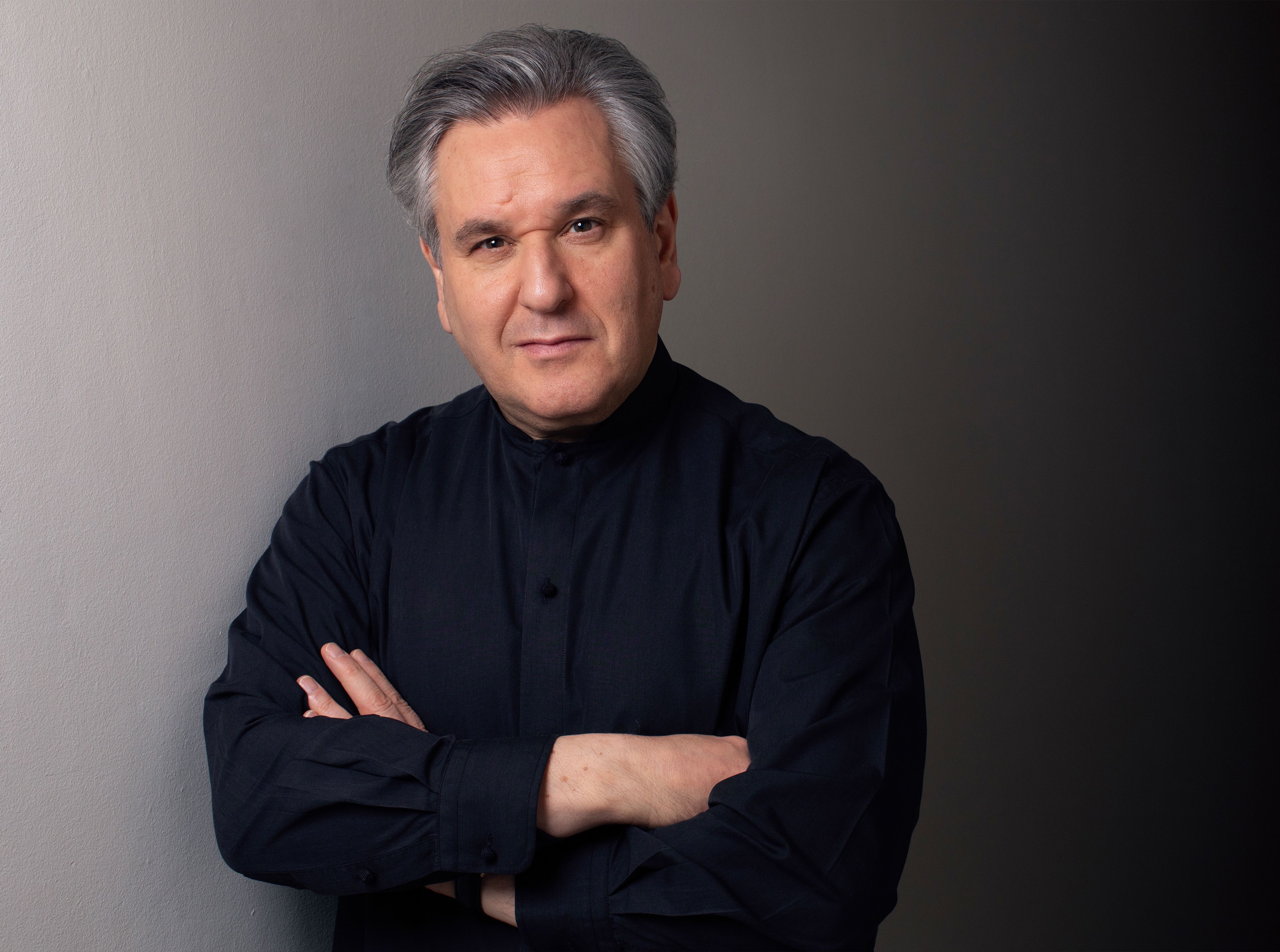
One of today’s most sought-after conductors, Sir Antonio Pappano is renowned for his charismatic leadership and inspiring performances across both symphonic and operatic repertoires. He is Chief Conductor of the London Symphony Orchestra, Conductor Laureate of The Royal Opera, Covent Garden, and Music Director Emeritus of the Orchestra dell’Accademia Nazionale di Santa Cecilia in Rome, having held the position of Music Director at both institutions from 2002 to 2024 and from 2005 to 2023, respectively. He was previously Music Director of Norwegian Opera and Théâtre Royal de la Monnaie, Brussels, and Principal Guest Conductor of the Israel Philharmonic Orchestra.
Pappano is in demand as an opera conductor at the highest international level, including with the Metropolitan Opera, New York, the State Operas of Vienna and Berlin, the Bayreuth and Salzburg Festivals, Lyric Opera of Chicago and the Teatro alla Scala. He has appeared as a guest conductor with many of the world’s most prestigious orchestras, including the Berlin and Vienna Philharmonic Orchestras, the Staatskapelle Dresden, the Leipzig Gewandhaus, Bavarian Radio Symphony and Czech Philharmonic Orchestras, the Orchestre de Paris and the Royal Concertgebouw Orchestra, as well as with the New York Philharmonic Orchestra, Chicago and Boston Symphonies and the Philadelphia and Cleveland Orchestras. He maintains a particularly strong relationship with the Chamber Orchestra of Europe.
Pappano has been an exclusive recording artist for Warner Classics (formerly EMI Classics) since 1995. His awards and honours include Gramophone’s Artist of the Year in 2000, a 2003 Olivier Award for Outstanding Achievement in Opera, the 2004 Royal Philharmonic Society Music Award, and the Bruno Walter Prize from the Académie du Disque Lyrique in Paris. In 2012, he was made a Cavaliere di Gran Croce of the Republic of Italy and a Knight of the British Empire for his services to music, and in 2015 he was named the 100th recipient of the Royal Philharmonic Society’s Gold Medal.
Sir Antonio Pappano was born in London to Italian parents and moved with his family to the United States at the age of 13. He studied piano with Norma Verrilli, composition with Arnold Franchetti and conducting with Gustav Meier. He has also developed a notable career as a speaker and presenter, and has fronted several critically acclaimed BBC Television documentaries including Opera Italia, Pappano’s Essential Ring Cycle and Pappano’s Classical Voices.

Sir Antonio Pappano © Frances Marshall
Sir Antonio Pappano © Frances Marshall
LSO Discovery Young Musicians
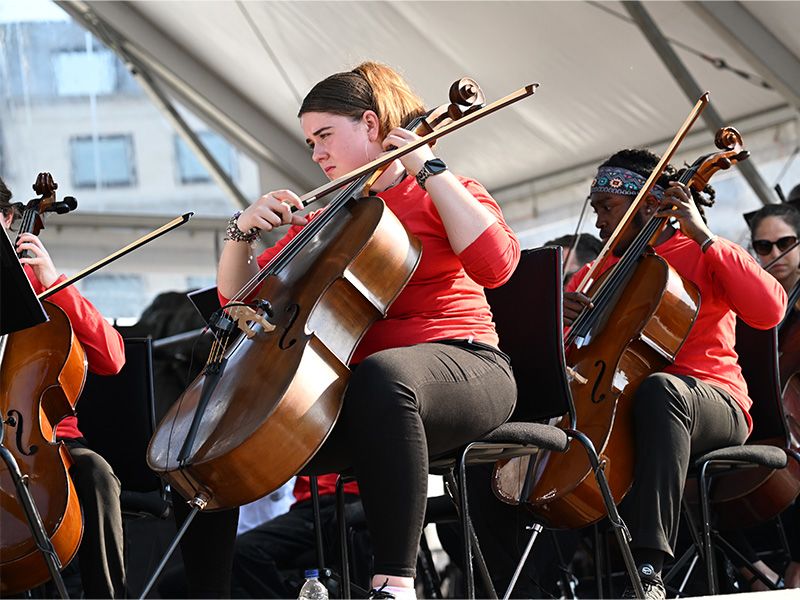
On stage today, young musicians from East London represent our ten LSO On Track partner Music Services, as well as Guildhall Orchestral Artistry Masters students and members of the LSO Pathways programme.
LSO On Track is a partnership between the LSO and ten East London Music Services. This partnership puts the LSO at the heart of the Music Hubs in East London, in the boroughs of Barking & Dagenham, Bexley, Greenwich, Hackney, Havering, Lewisham, Newham, Redbridge, Tower Hamlets and Waltham Forest. The programme is developed collaboratively between partners, providing a diverse programme of activity for young people which responds to changing need in the community and complements the local offer.
LSO On Track has a key objective of creating environments for young people to flourish, both musically and personally – wherever they started from musically, socially, economically and culturally. Like an orchestra, LSO On Track aims to build communities made up of people and organisations, greater than the sum of their parts. It provides a diverse programme which reflects the variety of individuals who make up the communities of East London, which bring together the skills and expertise of many individuals. The programme includes the East London Academy, today on stage, as well as activities for primary school teachers and their pupils, for special schools and disabled and/or neurodiverse young people, for young musicians to both devise their own new music and receive high-level coaching from LSO musicians, plus opportunities to perform in world-class venues, and much more.
LSO Pathways is a two-year programme of support and activity designed for emerging orchestral musicians who face barriers which may have hindered their progress and development. Participants take part in three residential weekends in London each year. All expenses are covered by the LSO. The residential weekends are designed around LSO activity taking place at that time, with opportunities to attend rehearsals and concerts. Training is provided in areas of orchestral life including education work, creative opportunities, audition workshops and career guidance. Alongside group activities, the aim is to offer a bespoke experience to each participant focusing on their own musical development. Each participant is matched with a mentor from the LSO, who carefully nurtures their personal and professional development over the two years.
Guildhall School Musicians
The London Symphony Orchestra and the Guildhall School of Music & Drama jointly deliver Orchestral Artistry, a specialist postgraduate training programme for exceptional string, wind, brass and percussion players aspiring to careers in professional orchestras.
As part of Guildhall’s Artist Masters Performance degrees, students benefit from expert coaching by LSO musicians, orchestral repertoire training and audition preparation, as well as opportunities to observe and play in LSO rehearsals, participate in masterclasses and engage in community projects.

LSO On Track at BMW Classics © Doug Peters
LSO On Track at BMW Classics © Doug Peters
LSO Discovery Young Musicians On Stage
First Violins
Destiny Oveto
Sumeet Mojumder
Witchakorn Suwanprateep
Adriana Reinika
Amelia Veigas
Nia Bratulic Igwe
Kingsley Weng
Second Violins
Viraj Dave
Rohan Dave
Sarah de Albuquerque
Mychajlo Goode
Reuben Burt-Reed
Jay Cheung
Aaliyah Booker**
Violas
Jasmine Neguib
David Iacob
Chaeyoon Kim
Nafis Meah
Aarohi Nitin
Cellos
Martha Norris
Grace Bryant
Jason Huang
Alexandra Untilova
Eliana Le Pham
Tahee Kim*
Double Basses
Helena Thomas
Ella Stiegler
Samie Kebede
Flutes
Ada Gascoigne
Zahra Morgan
Krish Kainth
Oboes
Aniss Mohammedi
Francis Curry
Rebecca Liu
Clarinets
Si Ying Lin
Bea Branscombe
Paul Damien
Ethan John-Lewis
Sandy Marcotte*
Bassoons
Emily Burke
Max Liu
Svetlana Nanda*
Horns
Elza Staniuk
Laszlo Whitaker
Danyal Akbari
Emma Winchester*
Trumpets
Milo Chernaik
Zakaria Chouaib
Kurtis-Kirk Owusu Asare
Samuel Bryant
Trombones
Andrei Oprisan
Sylvester Sigg-Horan
Tommy O’Sullivan
Tubas
Kieran Dennis
Rebecca Niziol
Percussion
Zachary Goodwin
Ada Tunc
Tyler Henry-Lewis
Lidia Rotolo
Stan Talman*
* Member of LSO Pathways
** LSO Pathways alumnus
Guildhall School Musicians On Stage
First Violins
Yuno Akiyama
Julie Piggott
Daisy Elliott
Michelle Kolesnikov
Second Violins
Helena Thomas
Ludwika Borowska
Violas
Emily Clark
Joshua Law
Mat Lee
Double Bass
Anton Avis
Flutes
Hanna Woźniak
Molly Gribbon
Oboe
Lidia Moscoso Bernal
Trumpet
Nina Garvey
Trombone
Christopher Trotter
London Symphony Orchestra
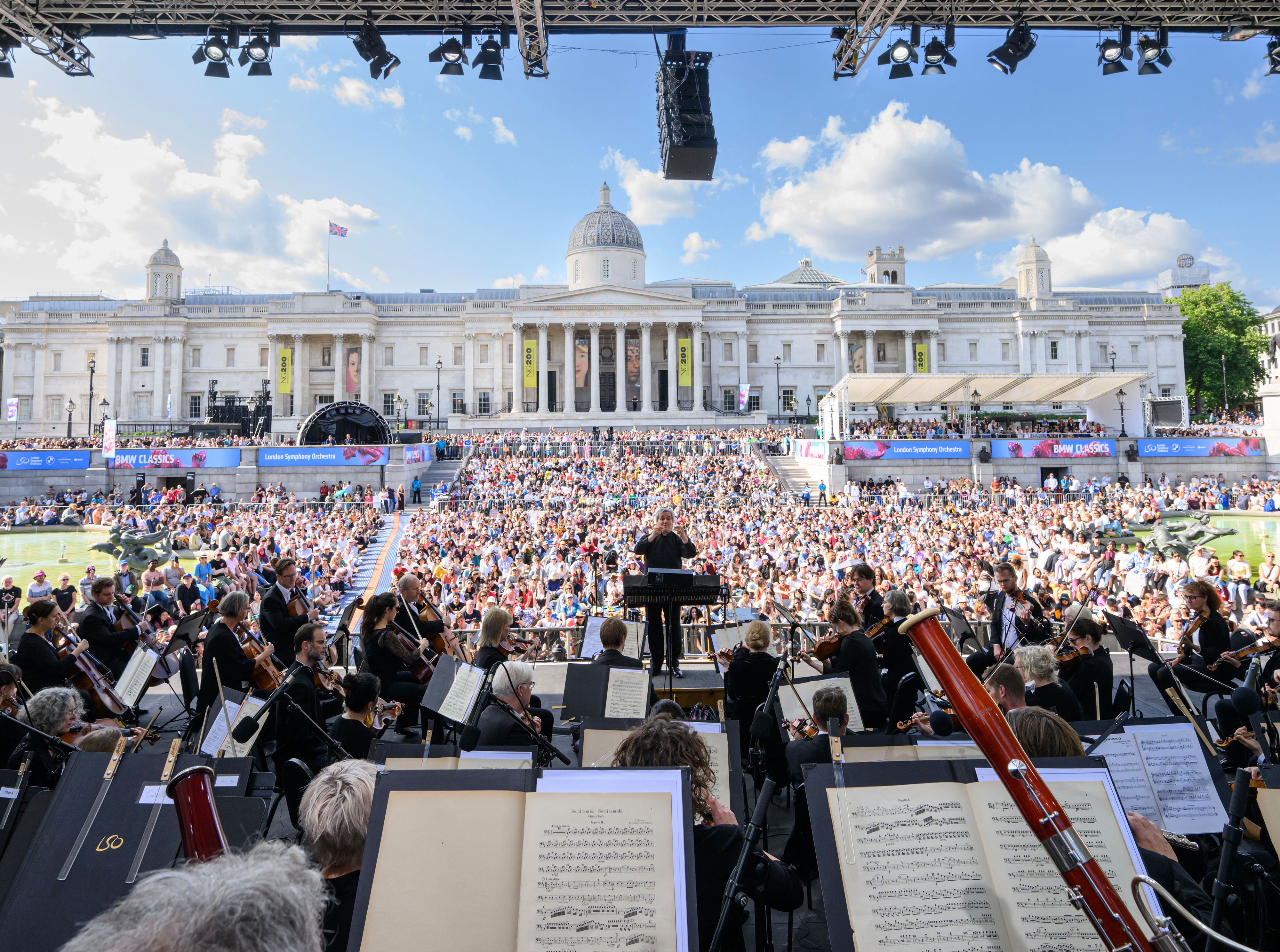
At the London Symphony Orchestra, we believe that extraordinary music should be available to everyone, everywhere – from orchestral fans in the concert hall to first-time listeners all over the world.
We were established in 1904, as one of the first orchestras shaped by its musicians. Since then, generations of remarkable talents have built the LSO’s reputation for quality, ambition and a commitment to sharing the joy of music with everyone. We are Resident Orchestra at the Barbican, and we reach international audiences through touring, online broadcasts and streaming services.
Through LSO Discovery, our learning and community programme, 60,000 people each year experience the transformative power of music. In 1999, we formed our own recording label, LSO Live, and revolutionised how live orchestral music is recorded, with over 200 recordings released so far.
Through inspiring music, educational programmes and technological innovations, our reach extends far beyond the concert hall.

BMW Classics 2025 © PA Images
BMW Classics 2025 © PA Images
On Stage
Leader
Andrej Power*
First Violins
John Mills
Clare Duckworth*
Ginette Decuyper
Olatz Ruiz de Gordejuela
Maxine Kwok*
William Melvin
Stefano Mengoli
Claire Parfitt
Laurent Quénelle
Sylvain Vasseur
Caroline Frenkel
Julia Rumley
Rhys Watkins
Second Violins
Julián Gil Rodríguez*
Thomas Norris
Sarah Quinn
Matthew Gardner
Naoko Keatley
Alix Lagasse*
Belinda McFarlane*
Csilla Pogány
Ingrid Button
Charlotte Chahuneau
Dániel Mészöly
Violas
Eivind Ringstad*
Gillianne Haddow
Malcolm Johnston
Germán Clavijo
Steve Doman
Julia O'Riordan
Thomas Beer
Robert Turner
Mizuho Ueyama*
Cellos
Rebecca Gilliver*
Alastair Blayden
Salvador Bolón
Daniel Gardner
Amanda Truelove*
Joanna Twaddle
Ghislaine McMullin
Young In Na
Double Basses
Enno Senft
Patrick Laurence
Thomas Goodman*
Joe Melvin*
Jani Pensola
Adam Wynter
Flutes
Amy Yule*
Imogen Royce
Piccolo
Patricia Moynihan
Clare Childs
Oboes
Juliana Koch
Rosie Jenkins*
Kara Battley
Cor Anglais
Maxwell Spiers
Bass Oboe
Ross Williams
Clarinets
Chris Richards
Chi-Yu Mo
Stefan Bulyha
Bass Clarinet
Ferran Garcerà Perelló*
Bassoons
Daniel Jemison
Joost Bosdijk*
Joshua Wilson
Contrabassoon
Martin Field
Horns
Mihajlo Bulajic*
Angela Barnes
Elise Campbell
Jonathan Maloney*
Nicholas Hougham
Tommaso Rusconi
Alex Harris
Trumpets
James Fountain
Adam Wright*
Katie Smith
Aaron Akugbo
Sam Dusinberre
Trombones
Rebecca Smith
Ryan Hume
Jonathan Hollick
Bass Trombone
Paul Milner*
Tuba
Ben Thomson*
Timpani
Nigel Thomas*
Patrick King
Percussion
Neil Percy
David Jackson
Sam Walton*
Tom Edwards
Harps
Bryn Lewis
Anneke Hodnett
Celeste
Elizabeth Burley
* On stage in Four Dances
COME AND SEE US AGAIN
The LSO's home is at the Barbican in the City of London, and has been since 1982. We perform concerts there almost every week from October to June, with Wildcard tickets starting at just £12. Bag a seat at a discount price, and find out exactly where when you get to the concert.

London Music Fund
Patron: Mayor of London
Developing Potential since 2011
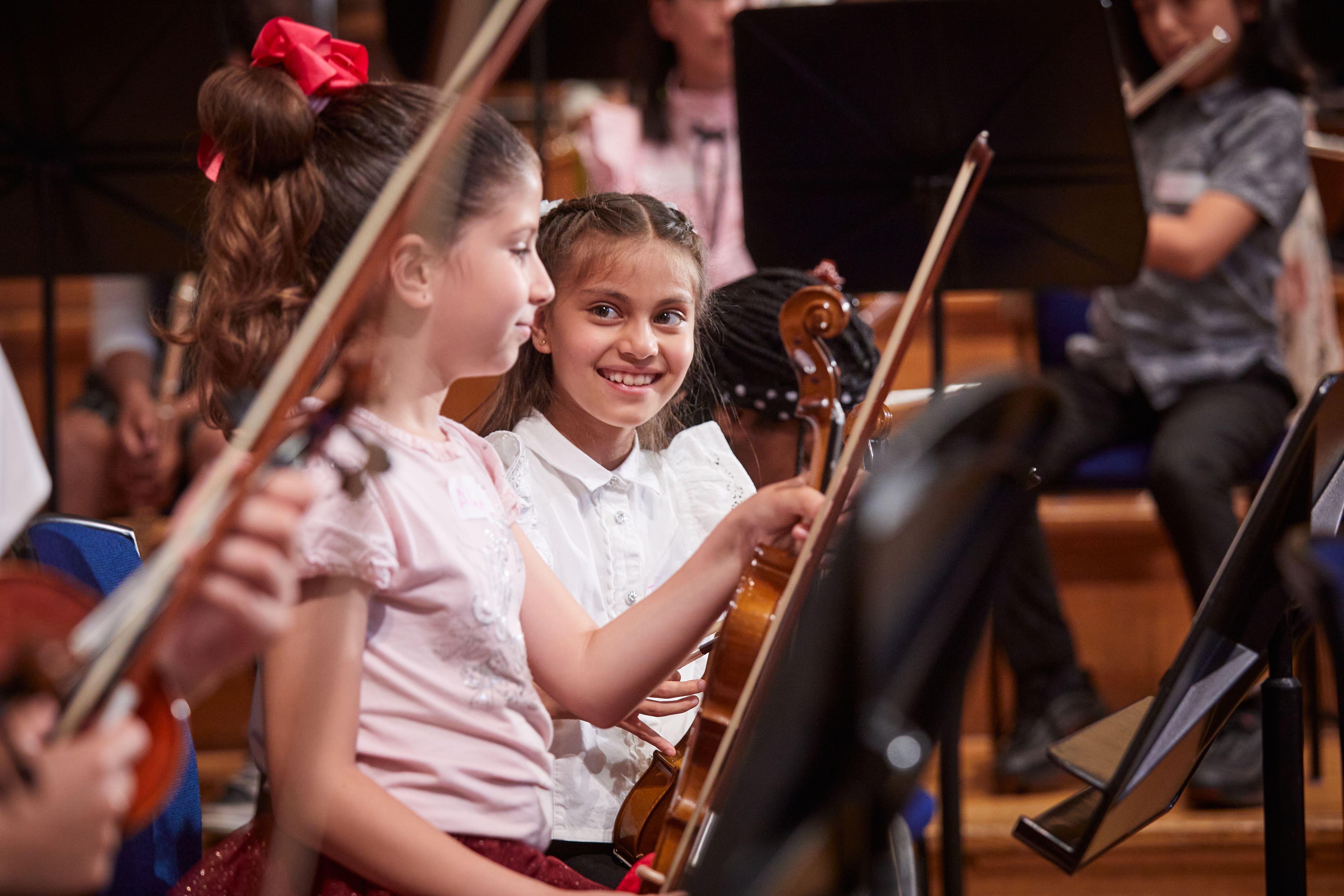
The London Music Fund’s mission is to transform under-served communities by enabling children to access high-quality music education.
Click to learn more and help us change young lives through music.
We hope you enjoyed BMW Classics 2026.
If you joined us in Trafalgar Square, thank you for coming and have a safe journey home.
To everyone who watched online, thank you for letting us bring music into your homes.
See you next year!
TELL US WHAT YOU THOUGHT
We'd love to hear about your BMW Classics experience. Let us know what you thought of the concert by filling out this short survey.
The LSO is funded by Arts Council England in partnership with the City of London Corporation, which also provides the Orchestra’s permanent home at the Barbican.
 Built with Shorthand